
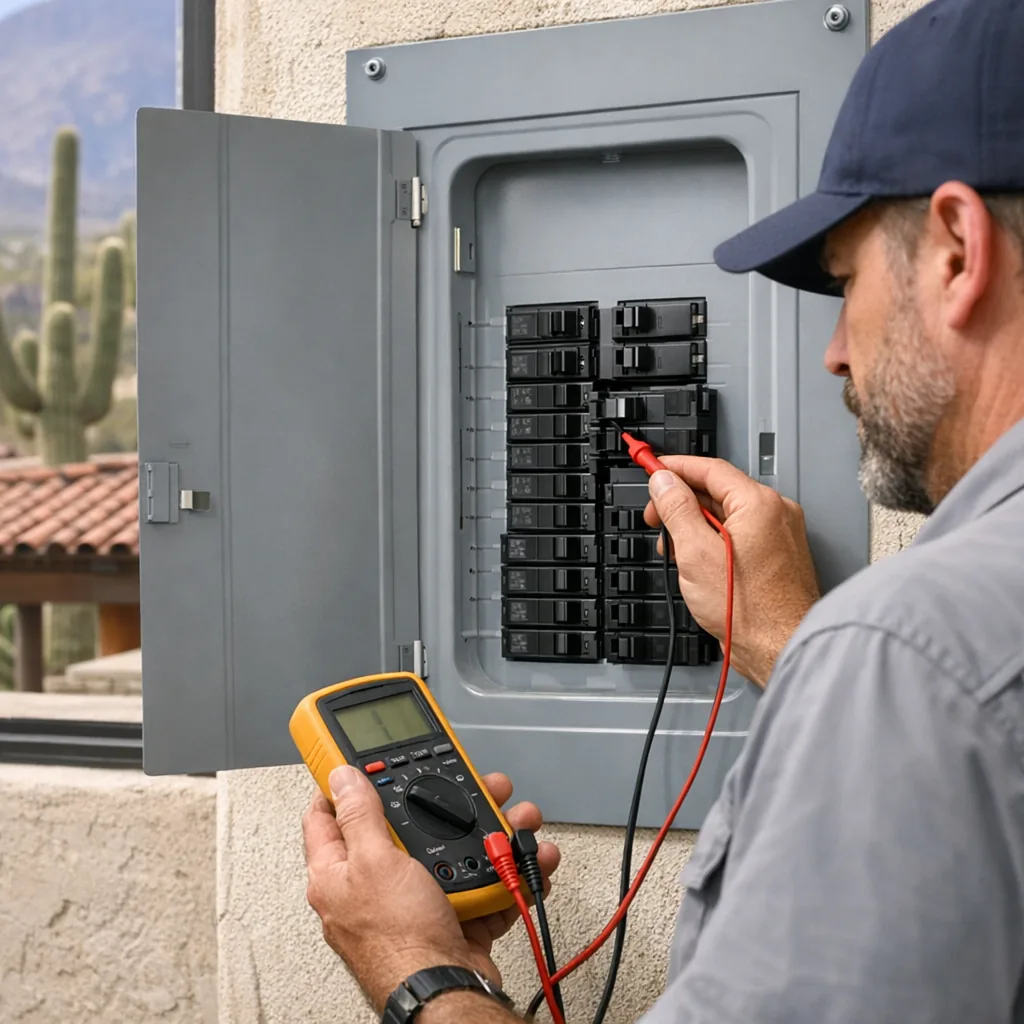
HVAC technician inspecting an air conditioner circuit breaker in a Tucson home

Why Your AC Keeps Tripping the Circuit Breaker

An air conditioner that repeatedly trips its circuit breaker should be turned off and professionally inspected. A breaker is a safety device. Resetting it once may confirm whether the trip was isolated, but resetting it again and again can expose the wiring, compressor or motors to additional damage and may create a fire or shock hazard.

Do Not Keep Resetting the Breaker

If the HVAC breaker trips again after one reset, leave it off. Call 520-303-3220 or request service through our online booking page. If you smell burning, see smoke or hear electrical arcing, use the emergency HVAC service page.

What the Circuit Breaker Is Protecting

Your cooling system uses one or more electrical circuits to power the outdoor condenser, compressor, indoor blower and controls. The breaker is designed to interrupt power when current rises beyond a safe level. That may happen because of a temporary electrical event, but repeated trips usually indicate a condition that needs diagnosis.

The breaker itself can fail, but it should not be replaced with a larger size simply to stop the tripping. The correct breaker size is determined by the equipment requirements, wiring and electrical design. Increasing the breaker rating without correcting the cause can remove an important layer of protection.

Common Reasons an AC Breaker Trips

1. A Weak or Failing Capacitor

Capacitors help the compressor and fan motors start and operate. When a capacitor weakens, a motor may struggle to start and draw excessive current. Homeowners may hear humming or repeated clicking from the outdoor unit before the breaker trips.

2. Compressor Problems

The compressor is one of the largest electrical loads in the system. Internal wear, overheating, damaged windings or mechanical binding can increase current draw. Compressor problems require electrical and refrigerant-system testing and are not appropriate for homeowner troubleshooting.

3. Outdoor Fan or Indoor Blower Motor Failure

A motor with worn bearings, damaged windings, a failing capacitor or a blocked wheel or blade can draw too much current. If the outdoor fan stops, the condenser cannot release heat properly, which can also raise system pressure and temperature.

4. Loose, Burned or Damaged Wiring

Heat, vibration, pests, corrosion and previous repairs can damage electrical connections. Loose terminals create resistance and heat. Burned insulation, discolored wires or melted connectors are serious warning signs that should be handled by a qualified technician.

5. Dirty Condenser Coil and Overheating

A heavily restricted outdoor coil makes it harder for the system to reject heat. The compressor may operate at elevated pressure and temperature, especially during a Tucson heat wave. Dirty coils do not cause every breaker trip, but they can contribute to electrical and mechanical stress.

6. Restricted Indoor Airflow or Frozen Coil

A clogged filter, dirty evaporator coil, blocked return or blower problem can reduce airflow. Poor airflow may cause the indoor coil to freeze and can change system operating conditions. Ice, weak airflow and breaker trips together require a complete diagnosis rather than one isolated repair.

7. Water or Condensate Problems

Condensate leaks can reach wiring, controls or motors. Water near electrical equipment is a reason to shut the system off and request service. Do not bypass a drain safety switch to keep the system running.

8. A Failing Breaker or Electrical Panel Issue

Breakers can wear out, and panel connections can loosen or overheat. An HVAC technician may identify whether the problem appears to be inside the equipment or whether a licensed electrician should inspect the panel and circuit.

Why Breaker Trips Are More Common During Extreme Heat

Tucson air conditioners operate under their highest load during long periods of extreme heat. The outdoor unit must release heat into very hot air, motors run longer and electrical components cycle repeatedly. A part that was already weak may continue operating during spring and fail only after the system reaches peak summer demand.

Our guide on how Tucson heat affects your air conditioner explains why high outdoor temperatures expose problems with airflow, coils, capacitors, motors and compressors.

Safe Checks a Homeowner Can Make

  1. Set the thermostat to Off.
  2. Find the labeled HVAC breaker and note whether it is tripped.
  3. Reset it only once by moving it fully to Off and then back to On.
  4. Check the air filter and replace it if it is heavily loaded and you know the correct size.
  5. Look for water, ice, smoke, burned odors or obvious debris without opening equipment panels.
  6. If the breaker trips again, leave the system off.

Do not remove electrical covers, touch capacitors, test live voltage, replace the breaker with a larger one or use an extension cord to power HVAC equipment.

Information to Share When You Call

  • Which breaker tripped and whether it tripped immediately or after several minutes
  • Whether the indoor blower or outdoor fan was running
  • Any humming, buzzing, clicking or burning smell
  • Whether the system had weak airflow, ice or water before the trip
  • Whether the problem began after a power outage or storm
  • The equipment age and recent repair history, when known

This information helps the technician prepare, but the cause still needs to be verified with proper electrical and system testing.

What a Technician May Test

A professional diagnosis may include checking breaker condition, wire size, voltage, running current, startup current, capacitors, contactors, motor windings, compressor condition, coil cleanliness, airflow and system pressures. The goal is not merely to make the breaker stay on. The goal is to identify why current exceeded a safe level.

Can Maintenance Prevent Breaker Trips?

Maintenance cannot prevent every electrical failure, but it can identify dirty coils, loose accessible connections, weak components, airflow restrictions and abnormal operation before a complete shutdown. Review our AC maintenance services in Tucson and our article on why regular HVAC maintenance matters.

Schedule Tucson AC Service

Sonoran HVAC & Plumbing provides cooling diagnostics, repair and maintenance throughout Tucson and surrounding communities. Explore our HVAC services, book standard service online, use the contact page, or call 520-303-3220.