
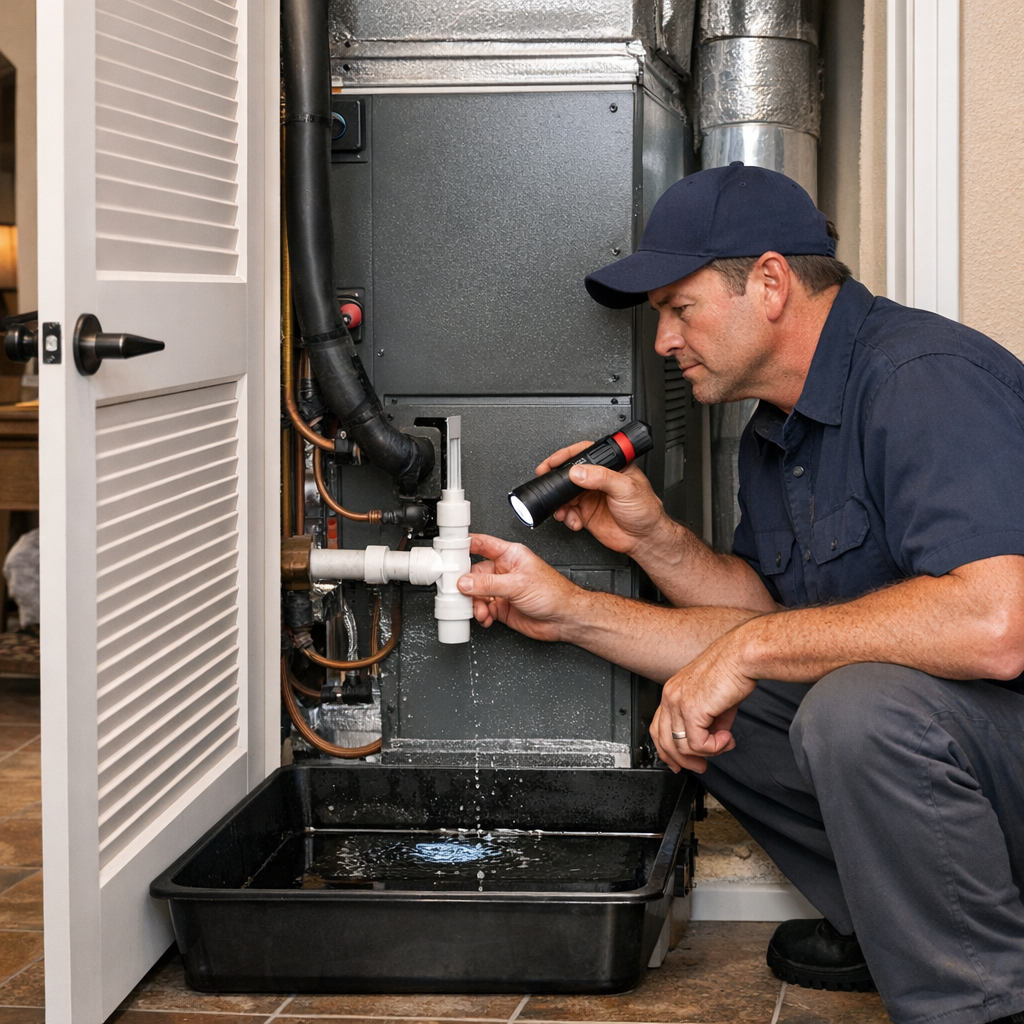
Water leaking from an indoor air-conditioning unit is usually caused by a condensate drain problem, a frozen evaporator coil, a damaged drain pan or a pump failure. Turn the system off if water is reaching ceilings, walls, flooring or electrical components. A small leak can become significant property damage if the cause is not corrected.
Water Near Electrical Equipment?
Turn the HVAC system off and avoid standing water near electrical components. Call 520-303-3220 or use our emergency HVAC service page when active leakage threatens the home.
Why an Air Conditioner Produces Water
The indoor evaporator coil becomes cold as the system removes heat from the home. Moisture in the air condenses on the coil, flows into a drain pan and leaves through a condensate line. During Tucson monsoon humidity, the system may produce substantially more water than it did during the dry part of summer.
Water production is normal. Water escaping the drain system is not.
Common Causes of AC Water Leaks
1. A Clogged Condensate Drain
Dust, biological buildup and debris can restrict the drain line. Water backs up into the pan and may trigger a safety switch or overflow into the surrounding area. A partially blocked line may not leak until monsoon humidity increases condensate flow.
2. A Frozen Evaporator Coil
When ice on the indoor coil melts, the volume of water can overwhelm the pan or drain. Common causes of freezing include restricted airflow, a dirty filter, blower problems, a dirty coil or refrigerant-system issues.
Do not chip ice from the coil. Turn cooling off and schedule service to identify why the coil froze.
3. A Cracked, Rusted or Misaligned Drain Pan
Drain pans can corrode, crack or shift. Water may escape even when the drain line is open. Older systems and difficult attic installations can make pan damage more likely or more difficult to see.
4. A Failed Condensate Pump
Some systems use a pump when gravity drainage is not possible. A failed pump, blocked discharge tube or power problem can cause the reservoir to overflow or shut the system down.
5. Damaged or Missing Drain-Line Insulation
Cold drain piping can sweat in humid conditions. Condensation on the outside of the pipe may look like a drain leak. Proper insulation and routing help control this problem.
6. Improper Equipment Level or Drain Installation
The indoor coil and pan must direct water toward the drain connection. Improper slope, poor installation or equipment movement can leave standing water or cause overflow.
Safe Steps Homeowners Can Take
- Set the thermostat to Off.
- Move valuables away from the leak.
- Use towels or a container only when it is safe and water is not near live electrical equipment.
- Check the air filter and replace it if it is heavily loaded.
- Look for visible ice on accessible refrigerant lines.
- Note whether water is coming from a primary drain, secondary drain, pan, ceiling or pump.
- Schedule service before restarting if the source is unclear or the leak returns.
Do not bypass a float switch, pour harsh chemicals into the drain without knowing the piping arrangement or keep operating a frozen system.
Why Monsoon Season Increases Leak Risk
Higher humidity means the evaporator coil removes more moisture from indoor air. A drain that handled dry-season operation may overflow during monsoon weather if it is partially restricted.
Dust can also contribute to filter loading, coil contamination and drain buildup. Review our guides on the Southern Arizona monsoon HVAC checklist and how dust and monsoon debris affect an AC system.
Water Leak or Plumbing Leak?
Not every puddle near HVAC equipment comes from the air conditioner. Nearby water heaters, plumbing lines, roof penetrations and drain piping may also leak. The timing and location provide clues:
- Water appearing only while the AC runs often points to condensate.
- Continuous leakage may involve plumbing or another source.
- Ceiling stains below attic equipment often require immediate inspection.
- Water near a furnace or air handler can come from the drain, coil or adjacent piping.
Sonoran HVAC & Plumbing can help determine whether the issue belongs to the cooling system or a plumbing component.
What a Technician May Inspect
A professional visit may include checking the filter, airflow, coil condition, drain pan, primary and secondary drains, float switches, condensate pump, equipment level, refrigerant-system operation and nearby sources of water.
The correct repair depends on the cause. Clearing a drain will not solve a frozen coil, and replacing a pan will not correct poor airflow.
Preventing Future AC Water Leaks
- Check filters regularly.
- Schedule maintenance before peak humidity.
- Keep accessible drains and terminations visible.
- Respond when a secondary drain begins dripping.
- Do not ignore weak airflow or ice.
- Inspect ceilings and areas below attic equipment after storms.
Learn more about AC maintenance in Tucson and why preventive maintenance matters.
Schedule Tucson AC Leak Service
Visit our HVAC services page, book standard service online, use the contact page, or call 520-303-3220.