
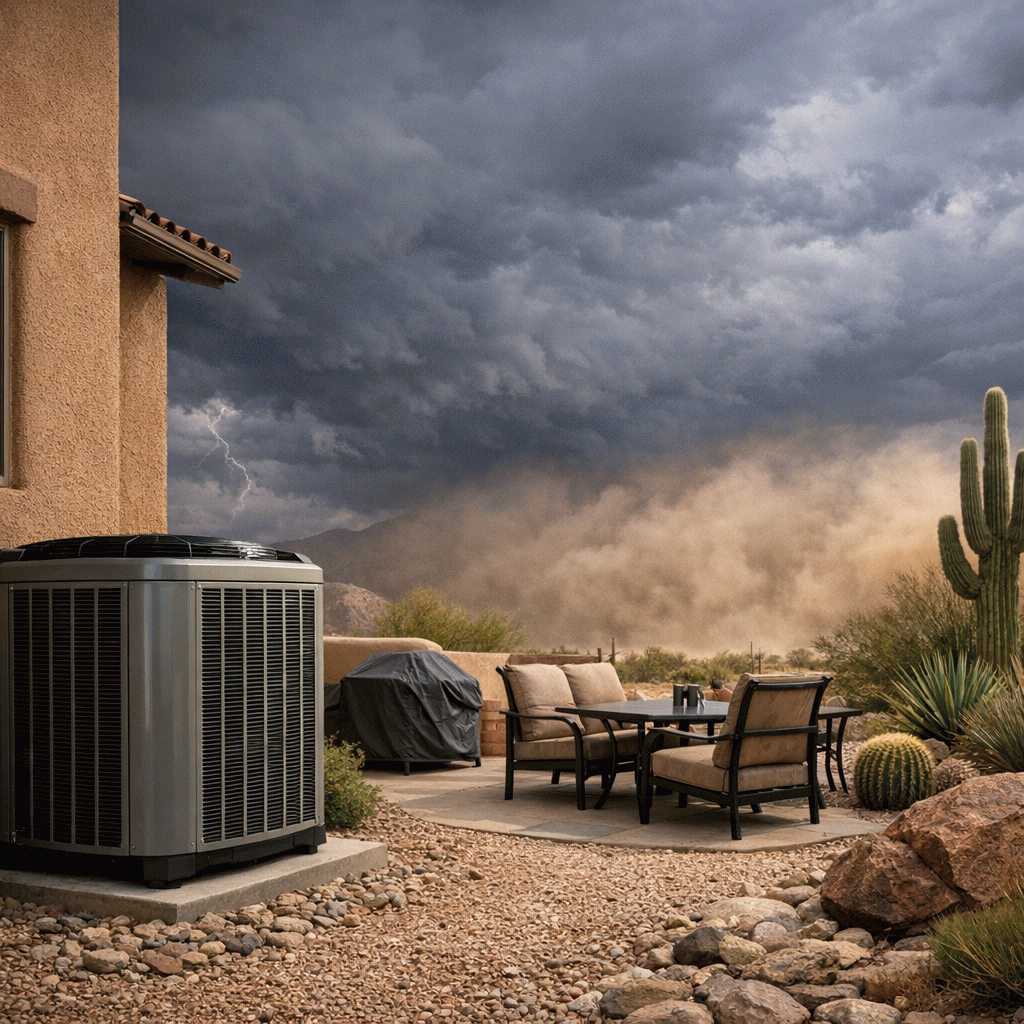
Southern Arizona monsoon season can expose HVAC systems to windblown dust, debris, power interruptions, drainage problems and sudden humidity. A simple checklist before and after storms can help homeowners protect airflow, spot water problems and recognize when the system needs professional service.
Before Monsoon Storms
Check the Air Filter
Dust levels can increase quickly during monsoon season. Inspect the filter before a major weather period and replace it when it is visibly loaded. Use the correct size and avoid installing a more restrictive filter without confirming that the system can handle it.
Clear the Outdoor Condenser Area
Remove loose leaves, cardboard, plastic bags, yard debris and lightweight objects that could blow against the outdoor coil. Maintain clear space around the unit, but do not cover it while it is operating. Covers and close fencing can restrict airflow and raise system pressure.
Secure Nearby Outdoor Items
Patio furniture, umbrellas, decorations and yard tools can become windblown hazards. Move or secure them before storms so they do not strike the condenser, disconnect wiring or damage refrigerant lines.
Inspect Visible Drainage
Know where the primary and secondary condensate drains terminate. Water from a secondary drain or water near the indoor unit may indicate that the primary drain is restricted. Do not ignore new drainage during humid weather.
Review Surge Protection and Electrical Safety
Monsoon storms can bring outages, voltage fluctuations and lightning. Whole-home and HVAC surge protection can reduce risk, but no device can guarantee protection from every event. If the system repeatedly trips a breaker after a storm, leave it off and request service.
During a Storm
- Do not work around the outdoor unit during lightning, flooding or strong wind.
- Keep windows and exterior doors closed when practical to reduce indoor dust and humidity.
- Do not cover the operating condenser.
- Do not stand in water near electrical equipment.
- If power repeatedly cycles, set the thermostat to Off until power is stable.
After power returns, wait several minutes before restarting the system. Many thermostats and controls include a built-in delay to protect the compressor.
After the Storm
Look for Debris Around the Condenser
Once conditions are safe, inspect the outdoor unit from the outside. Remove loose debris around the cabinet, but do not reach through the grille or open electrical panels. Bent panels, damaged fan blades, displaced equipment or broken wiring require professional attention.
Check for Water Near Indoor Equipment
Higher humidity can increase condensate production. Water near the air handler, furnace, ceiling or drain pan may indicate a blocked drain, frozen coil, cracked pan or pump problem. Turn the system off if water is approaching electrical components.
Listen for New Sounds
Buzzing, scraping, rattling or repeated clicking after a storm may point to debris, fan damage or an electrical issue. Shut the equipment down if the sound is severe or the breaker trips.
Check Cooling and Airflow
Confirm that air is moving normally and that the home begins cooling. Weak airflow, warm air, ice or unusual cycling are reasons to schedule service rather than continuing to force the system to run.
Monsoon HVAC Checklist
- Inspect and replace dirty filters
- Clear loose debris around the outdoor unit
- Secure patio and yard items
- Keep supply vents and return grilles open
- Watch the condensate drains
- Check for water near indoor equipment
- Listen for new noise after storms
- Reset a tripped breaker only once
- Schedule service for recurring electrical or drainage problems
Why Humidity Changes Matter
Although Tucson is known for dry heat, monsoon air can carry much more moisture. The evaporator coil removes some of that moisture as the system cools the home, increasing water flow through the condensate drain. A partially restricted line may begin overflowing only when humidity rises.
Humidity can also make the home feel warmer at the same thermostat setting. Lowering the thermostat dramatically may increase runtime without solving the underlying comfort issue. If indoor humidity remains unusual or the system cannot maintain comfort, airflow, sizing and equipment operation should be evaluated.
Dust and Debris Problems
Windblown dust can load filters, coat coils and collect on blower components. Debris against the condenser reduces airflow and can damage the fan. Our related guide explains how dust and monsoon debris affect an air conditioning system.
Electrical Problems After an Outage
If the thermostat is blank, check whether it uses batteries and whether the HVAC breaker has tripped. Reset a breaker only once. If it trips again, leave it off. Review our guide on why an AC keeps tripping the circuit breaker.
Burned odors, visible arcing, smoke or water near electrical components require urgent attention through our emergency HVAC service page.
Maintenance Before and During Monsoon Season
Professional maintenance can identify drain restrictions, dirty coils, loose accessible electrical connections, weak components and airflow concerns before storms add additional stress. Visit our AC maintenance Tucson page or read why regular maintenance matters in Southern Arizona.
Schedule Tucson HVAC Service
Sonoran HVAC & Plumbing provides cooling maintenance, diagnostics and repair throughout Tucson and surrounding communities. Explore our HVAC services, book standard service online, use the contact page, or call 520-303-3220.