
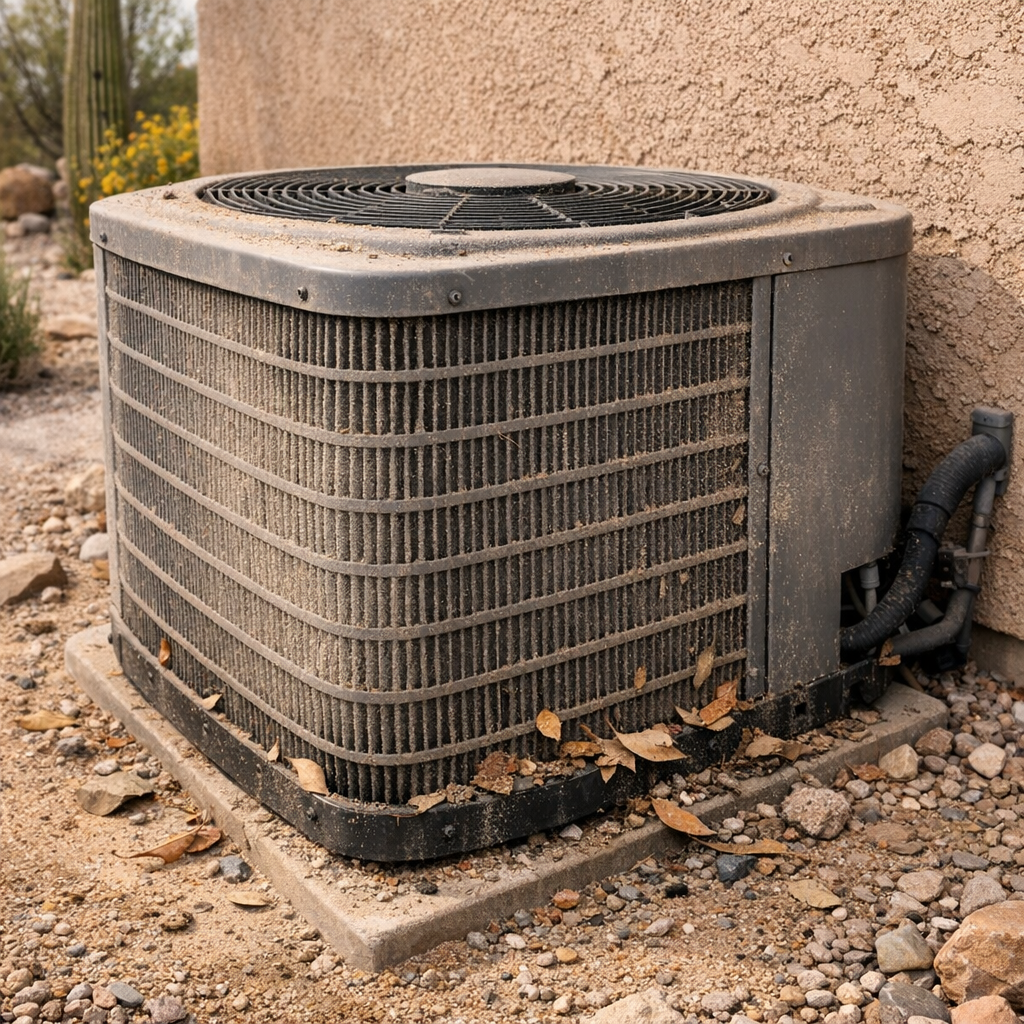
Dust and monsoon debris can reduce AC airflow, coat heat-transfer surfaces, load filters, damage outdoor fan components and contribute to longer runtime. Tucson air conditioners are designed to operate outdoors, but they still need open airflow and routine inspection. The most important homeowner steps are keeping the condenser area clear, checking filters regularly and responding to changes in noise, cooling or drainage.
How Desert Dust Enters the HVAC System
Indoor air is pulled through return grilles, passes through the filter and moves across the evaporator coil before being delivered to the rooms. Fine dust can enter through open doors and windows, air leaks, pets, clothing and normal household activity. During windy weather, the amount of airborne dust may increase substantially.
The filter captures part of that material, but a missing, poorly fitted or overdue filter allows more dust to reach the blower and indoor coil. Even with good filtration, some fine material can accumulate over time.
What Dust Does to the Air Filter
A dirty filter creates resistance to airflow. As the filter loads, the blower may move less air through the system. Reduced airflow can cause:
- Longer cooling cycles
- Weak airflow at the vents
- Hot and cold rooms
- Increased blower workload
- Evaporator-coil icing
- Reduced comfort and higher energy use
Check the filter monthly during heavy-use and dusty periods. Replacement frequency depends on filter type, pets, occupancy, home conditions and system runtime. Use the correct dimensions and do not assume that the highest-rated filter is automatically best for every system.
Dust on the Indoor Coil and Blower
The evaporator coil absorbs heat from indoor air. Dust on the coil acts as insulation and can restrict the passages between the coil fins. A dirty blower wheel may also move less air even though the motor is running.
These components are not always visible without opening equipment panels. Professional cleaning should be based on inspection and performed with methods appropriate for the equipment. Harsh chemicals, sharp tools and high-pressure cleaning can damage fins, coatings and nearby components.
What Happens at the Outdoor Condenser
The condenser releases indoor heat to the outdoor air. Its coil and fan need a large volume of unobstructed airflow. Dust, lint, leaves, plastic bags and yard debris can block the coil or grille.
When heat cannot escape efficiently, the system may run longer and operate at higher pressure and temperature. That adds stress during the hottest part of the Tucson summer. Learn more in our guide on how extreme Tucson heat affects an air conditioner.
Monsoon Debris Can Cause Physical Damage
Strong winds can carry branches, gravel, roofing material, decorations and lightweight yard objects. Debris may bend the condenser grille, damage fan blades, strike refrigerant lines or pull on electrical connections.
After a storm, inspect the unit only when conditions are safe. Do not reach through the grille or operate equipment with a visibly damaged fan or cabinet. Our Southern Arizona monsoon HVAC checklist covers before-and-after storm steps in more detail.
Dust and Condensate Drain Problems
The indoor coil produces condensate as it removes moisture from the air. Dust, biological buildup and debris can contribute to drain restrictions. During monsoon humidity, the system may produce more water, making a partial blockage more noticeable.
Watch for water near the indoor unit, water from a secondary drain, ceiling staining or repeated drain-safety shutdowns. Do not bypass a safety switch or continue operating equipment when water is approaching electrical components.
Signs Dust or Debris May Be Affecting Performance
- The filter becomes dirty quickly
- Airflow from the vents is weaker
- The AC runs longer than normal
- Rooms cool unevenly
- The outdoor unit sounds louder or rattles
- The condenser fan appears obstructed
- Ice forms on the refrigerant line
- Electric use rises without a clear change in thermostat settings
These symptoms can also have other causes. A complete diagnosis should evaluate airflow, coil condition, electrical operation and refrigerant-system performance rather than assuming dust is the only problem.
Safe Homeowner Cleaning and Inspection
- Turn the thermostat off before inspecting around the equipment.
- Remove loose leaves and trash from the ground around the condenser.
- Trim vegetation to maintain open airflow and service access.
- Check the filter and replace it when needed.
- Keep indoor return grilles and supply vents clear.
- Look for water, ice, unusual sounds or visible storm damage.
Do not remove electrical panels, touch capacitors, insert tools through the grille or use high-pressure water on the coil. If the fan, wiring, refrigerant lines or cabinet are damaged, leave the system off and request service.
How Maintenance Helps
A professional maintenance visit can assess filter condition, indoor and outdoor coil cleanliness, blower operation, condensate drainage, accessible electrical components and overall cooling performance. Preventive service is especially useful after a period of heavy dust or storm activity.
Review our AC maintenance services in Tucson and our guide explaining why regular HVAC maintenance matters.
Dust, Energy Use and Breaker Trips
Restricted heat transfer and airflow can increase runtime and equipment stress. Dust alone does not explain every high bill or electrical trip, but it can be one part of the problem. See our articles on common causes of high summer electric bills and why an AC keeps tripping the breaker.
Schedule Tucson HVAC Service
Sonoran HVAC & Plumbing provides cooling maintenance, repair and system evaluations throughout Tucson and surrounding communities. Visit our HVAC services page, book an appointment online, use the contact page, or call 520-303-3220.